PBBG players talk in a shorthand that newcomers have to pick up fast: ticks, AP, nerve, rounds, wipes, speed servers. This glossary defines the terms you will meet in persistent browser games. Each entry names a game from our index that uses the word, and links the directory page that collects similar games. Where the site already has its own definition, we quote it, so the words here mean the same as the tags you filter by.
The kind of game
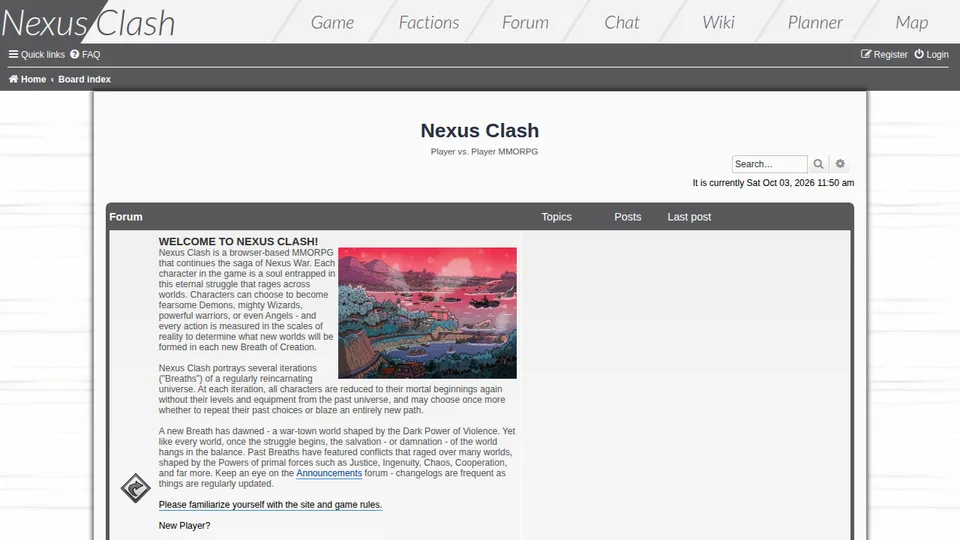
PBBG. A persistent browser-based game: it runs in a normal browser tab, and its world keeps going after you log out. Nexus Clash’s new player guide puts both halves well. The game needs “no software beyond a typical web browser”, and the world and your characters “remain active even while you aren’t logged in.” The second half is what separates a PBBG from a browser game you play for ten minutes and close. Every game in our directory has to meet both.
Text-based. Our text-based tag means “played mostly through text and menus rather than graphics.” Torn, running since 2004, is one, and over half the games we list carry the tag. For players it usually means the game runs well on a phone or an old laptop. For builders it means the writing and the numbers carry everything. There is no art to hide a thin loop.
MUD. A multi-user dungeon: a shared world you play by reading room descriptions and typing commands. Aardwolf has been online since 1996 and describes a MUD as “a multi-user RPG/fantasy world”. MUDs predate the web. The ones on our MUD page are “text-driven multiplayer worlds, now playable in a browser tab.” One trap: when Aardwolf says it “reboots every week or two”, that is a server restart to add content, not a reset.
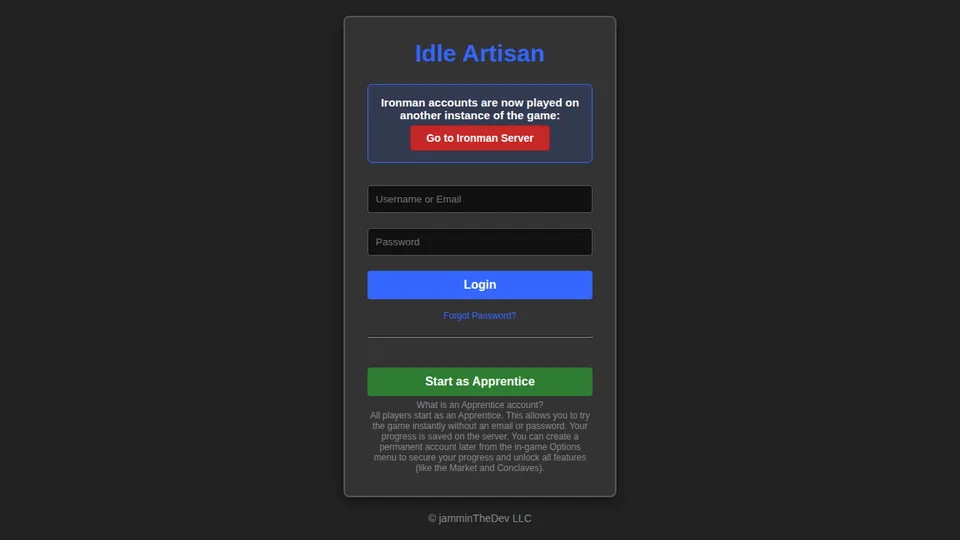
Idle and offline progress. Your character keeps working while the tab is closed. Our idle genre reads “progress keeps ticking while the tab is closed; others share the world”. The second clause matters: we list multiplayer idle games, not solo clickers. The number to check is the offline cap. Milky Way Idle’s Steam page promises “offline progress of 10+ hours (or days!)”. Idle Artisan’s guide starts you with one hour of stored offline time and adds an hour per level of one building, the Scholar’s Study.
Time and pacing
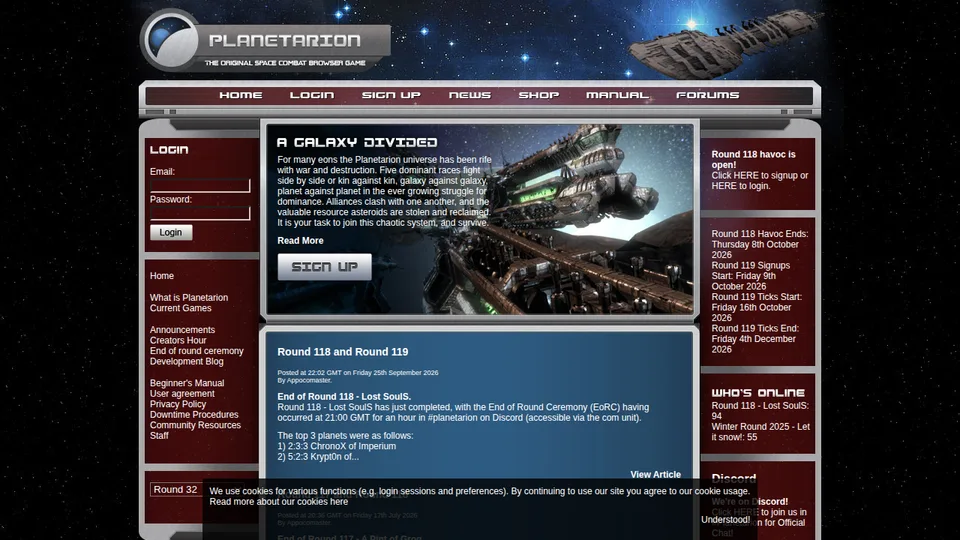
Tick. A scheduled moment when the server updates everyone at once. Planetarion ticks “once per hour, on the hour”: resources arrive, builds progress and battles resolve, whether or not you are logged in. Ticks can be much shorter. Idle Artisan’s heartbeat is one tick every two seconds. Our turn-based tag covers games where “actions resolve in turns, ticks or daily updates.”
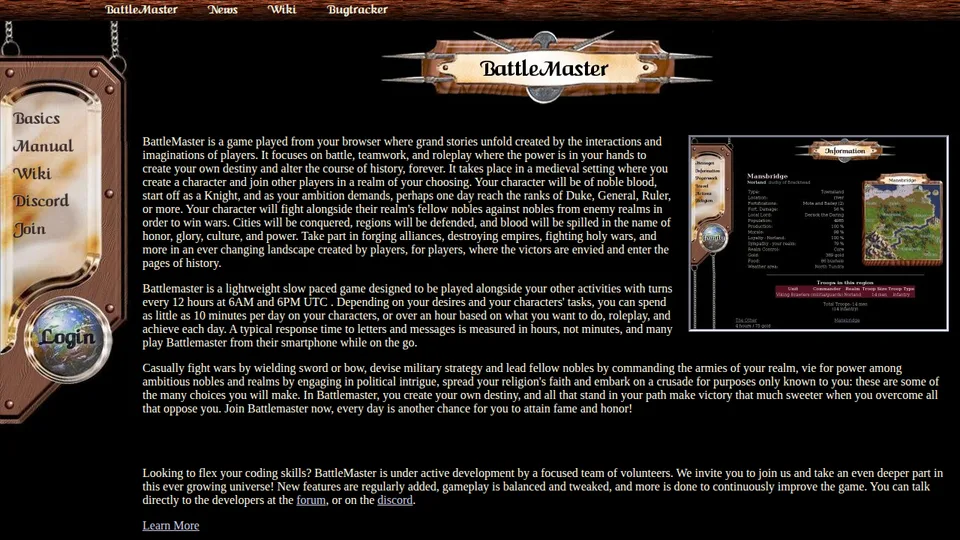
Turn. Either a tick by another name, or a unit you spend. BattleMaster has two turns a day, sunrise and sunset, when travel, battles and taxes happen. Wardenfall gives “fifteen turns a day” to spend as you like, and resets them when the realm cycles at midnight. Ask which kind a game means. The first sets when things happen; the second sets how much you can do.
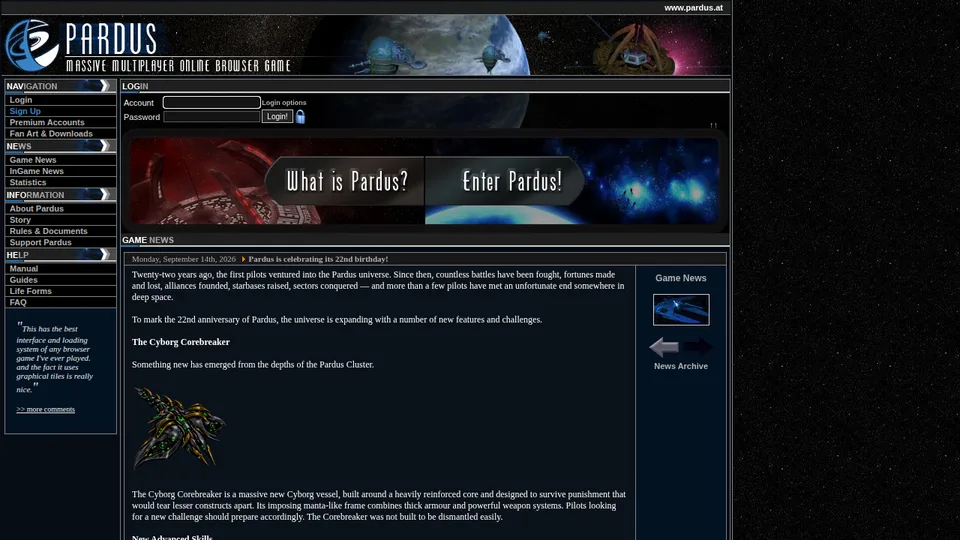
Action points (AP). A spendable allowance that refills on a clock. Pardus’ manual gives 24 AP every 6 minutes, or 5,760 a day, up to a store of 5,000. It says two five-minute logins a day are “theoretically enough” to advance at full efficiency. Urban Dead, which closed in March 2025, ran on 50 AP that refilled at one every half hour. Our energy system tag covers both: “actions spend energy or action points that refill over time.”
Energy and nerve. Named AP bars, usually split by activity. In Torn, energy pays for the gym and fights, and nerve pays for crimes. Torn’s live wiki sits behind a bot check, so we read archived copies. They give energy as 5 every 15 minutes up to 100 and nerve as 1 every 5 minutes. Two bars let a designer pace training and crime separately.
Real-time. “The world moves while you watch,” in our real-time tag’s words. In Travian Kingdoms, troops and buildings take real minutes and hours, so an attack sent at midnight lands when it lands. Real-time and AP are not opposites. Pardus’ about page says all game action “is carried out in realtime - not turnbased”, and still rations you with AP.
Rounds and resets
Round. A game with a start, an end and a winner, after which the world starts again. Planetarion rounds last about seven weeks, and “after each round the universe is reborn, and everyone starts afresh.” Miniconomy runs three-week trading rounds. Our seasons or rounds tag covers worlds that “reset or new servers start regularly”. About one in five games we list carries it.
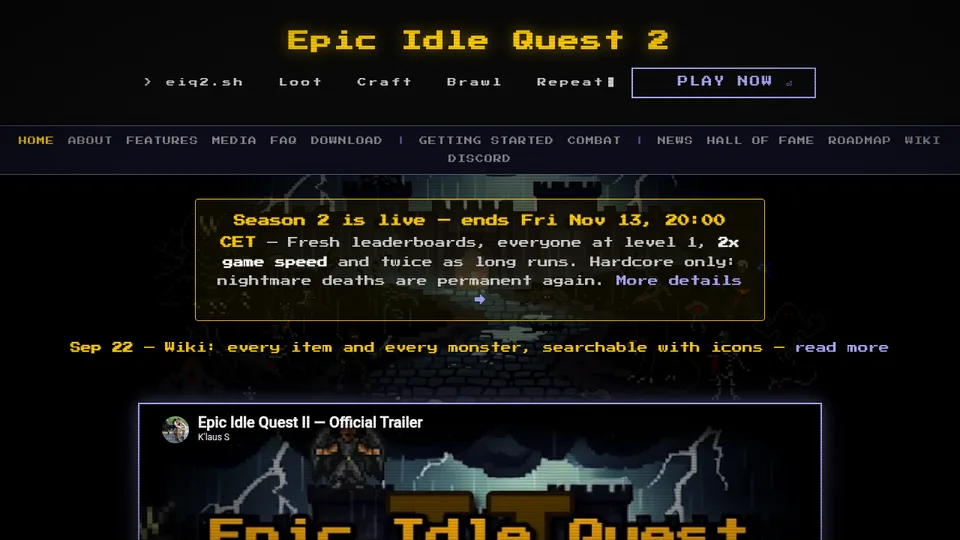
Season. Often a round by another name, but sometimes only the leaderboard restarts. Epic Idle Quest 2 runs seasons on a separate Temporal realm where “everyone rolls a fresh character”, while its Eternal realm never resets. Titan Conquest’s help page says “nothing resets” at a new season. You need a new hero to appear on the new leaderboard, but old heroes play on.
Age, era, breath. House names for a round. Age of Banners runs six-week Ages, after which “the world resets”. Nexus Clash calls its rounds Breaths, which “typically last one or more years”.
Reset. The world, or one account, goes back to the start. Resets come at the end of a round or at a player’s request. Galactic Tycoons has a “Reset company” button for anyone who wants to start over, while its FAQ says the galaxy itself “will not be reset or shut down.”
Wipe. A reset that deletes, usually said of accounts. Ultimate Assassins says it plainly: when a round ends, “the databases are cleared and the player data is deleted”, login included. Games in testing often warn of a wipe before launch. If a game’s pages do not say whether it wipes, treat the question as open.
Worlds and servers
Universe, world, server. One copy of the map with its own population. Pardus runs several universes, and reserves one, Pegasus, for premium accounts. Tribal Wars numbers its worlds and ends each one when a tribe, or on some worlds a player, meets the victory conditions. CozmoGame’s lobby lists universes side by side, each with its own economy and fleet speed. A fresh world is the classic answer for people who join late.
Speed server. A world with the clock multiplied. Travian Kingdoms runs x2, x3 and x5 worlds, and shortens beginner’s protection from 7 days at x1 to 3 days at x5. Tribal Wars’ help wiki says a building goes up twice as fast on a Speed 2 world. Speed worlds suit someone with a fortnight to spare, not a year.
Protection. A period when a new account cannot be attacked. Planetarion removes it after 24 ticks of your planet’s life. Travian Kingdoms lifts it after 7 days at x1 speed, or earlier once your population reaches 200.
Groups
Our guilds and factions tag covers all of these: “organised groups with shared goals and politics.” About seven in ten games we list carry it, about as many as carry the PvP tag.
Alliance. A player group that coordinates attack and defence, common in strategy games. Planetarion alliances take up to 70 players. Where alliances negotiate treaties, see our diplomacy tag.
Faction. Two meanings. In Torn a faction is a player group that wars over territory. In Pardus the factions are the game’s own powers, and you gain military rank in one through missions. Check which kind before you join.
Family. The crime-game word for a guild, used across our crime page. The Fifth Family offers five preset families, or you can found your own.
Guild. The RPG and idle word. Galactic Tycoons guilds build shared projects at the Exchange. Idle Artisan calls its guilds Conclaves. Tribal Wars says tribe, Travian Kingdoms says kingdom, Aardwolf says clan. The mechanics overlap more than the names do.
Money
Premium currency. Currency bought with real money, and sometimes also earned in play. Galactic Tycoons’ stars come from a daily login mission, missions, referrals or purchase. Travian Kingdoms sells Gold, Tribal Wars premium points, Torn points. For players the question is what it buys: time, convenience, cosmetics or power.
Donator or supporter pack. A bundle bought to support the game, usually with perks attached. Torn’s wiki describes a Donator Pack as 31 days of donator status plus 50 points. Donator status raises the energy bar to 150 and the refill to 5 every 10 minutes. Epic Idle Quest 2 sells a one-time Supporter Pack and says it has “no monetisation model built around selling power.”
Rule words
Multi. A second account run by the same person. Pardus’ rules allow “exactly ONE account”, and treat two accounts logging in from one computer as multi-accounting. Urban Dead’s FAQ allowed several characters only if they led “completely separate existences”. Players call a pack of coordinated alts a zerg.
Sitter and dual. Sanctioned ways to share an account. Travian Kingdoms allows up to two sitters with limited rights and two duals with full control. Its rules define a dual as one avatar played by several people “to achieve a longer period of sustained online activity.”
For builders: say which one you mean
Most of these words are overloaded. “Season” can mean a full wipe or a fresh leaderboard. “Faction” can mean a player guild or the game’s own powers. “Turn” can mean a clock or a currency. Players come to your homepage with three questions: how often does the world update, what refills and how fast, and what resets. Pardus answers all three in its manual, with numbers.
Many sites do not. Fewer than one in five listings in our index has a reset rule we could record, because we only fill that field when a game’s own pages state one. Put the numbers on one public page: tick length, regeneration rate and cap, round length, and what carries over. If you are building a game and want it listed, our submit page asks how your world resets, so have that answer ready.