New browser games get called AI slop when their public pages look generated rather than made. The giveaway is rarely the art or the code. It is template text in the terms, a homepage that is only a login box, no date on anything, a player counter nobody can check, and copy that never says what you do in the game. We have reviewed hundreds of game sites for this directory, and many of the new games we turn down fail on basics like these rather than on the game itself. A player can reach the same verdict in seconds. Every one of these problems is cheap to fix.
What players are reacting to
A persistent browser game asks for months of someone’s evenings. Before a player makes a character, they are betting that someone will still be running the world next season. AI coding tools have made it quick to put a convincing site in front of that bet, so players look past the surface for proof of a person: a name, a date, a rule they can read, a number they can check. “AI slop” is the label for a site where that proof is missing.
Our own reviews show the same thing. What sinks a new game is missing proof, not the tools behind it.
Six patterns from our reviews
Everything below comes from games we reviewed, some listed and some turned down. Bad examples stay anonymous; the pattern is the point.
1. Template text left in the legal pages
One set of terms says that “ownership, payment, refund, suspension, dispute, age, jurisdiction, and contact terms should be added here before launch”. Another calls itself “a working draft provided for launch preparation” and adds that “the operator should still have the legal wording reviewed by counsel”. That sentence was written for the developer, not the player. A third game sells upgrades while its terms say the operator’s legal details will be added before commercial release. One game’s description in search results and link previews still reads “Lovable Generated Project”, the placeholder from the app builder it was made with.
None of this means the game itself is bad. It means nobody read the page before it went live, and a player is entitled to wonder what else went unread.
2. A homepage that is only a login box
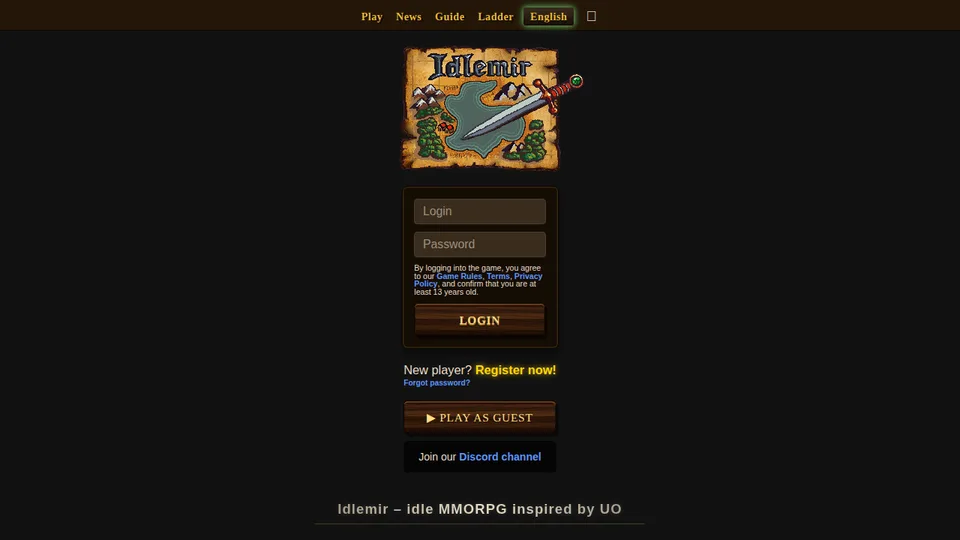
A logo above a login form tells a player nothing about the world behind it. We have declined several games for this alone: no about page, no rules, no news, nothing to verify.
When we do list a game like this, we often have to read its description out of the site’s JavaScript. That happened for roughly one listing in eight across the whole index. Among games still in alpha or beta it was nearly one in four. Among games that have run for ten years or more, it was a handful. A player will not dig through script files. They will close the tab.
3. No dated news anywhere
About one listing in five has no dated activity on record. A few of those sites blocked our checks. For most, we read the public pages and found no dated changelog entry, news post or forum post anywhere. Version numbers without dates do not help. A release note headed with a version number says nothing about whether it shipped last week or last year. A site with no dates makes a new game look abandoned on its first day.
4. Numbers nobody can check
A live counter on a landing page is self-reported, and some sites show why that matters. One game’s own code contains an admin panel section titled “Public Stat Fluff”, with the instruction “Adjust the extra counts added to the public landing page stats.” Another landing page promises battles “fought by thousands of players” for a game still on an alpha server. A third describes five character classes in its search description and four in its app manifest.
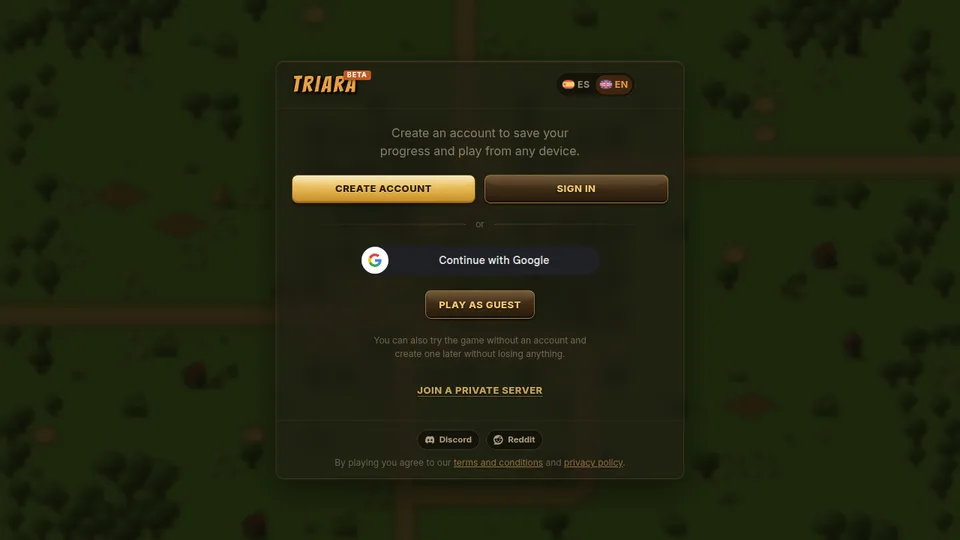
The honest version exists. One new game labels the chat box on its homepage “Simulated live chat”, so nobody mistakes a demo for a crowd. Triara’s developer wrote that its leagues are “joined by teams run by the game itself so the table is never empty”. Being small is not the problem. Being caught padding is.
5. A community of a dozen people
Plenty of games we list have small Discord servers, and that is normal in a game’s first months. The trouble starts when a dozen members sit next to copy about a thriving community, or when the community link leads to a developer’s general server shared by several projects. A Discord invite shows its member count to anyone who opens it. A small community described as small reads as honest. The same community described as thriving reads as a warning.
6. Copy that never says what you do
This is the most common problem and the easiest to spot. A tagline such as “Fight. Build. Rule the World.” could sit on almost any strategy game of the last twenty years. Words like “living”, “legendary” and “endless” describe a genre, not a game. Every listing we write needs one sentence that says what a player does and what the world is. For many new games, that sentence is harder to find on their own site than it is for a game that has run for two decades.
What the better new games do instead
The games below are new or recently rebuilt. Several are made by one person, and three say openly that they use AI tools. What they share is public pages that answer a player’s questions.
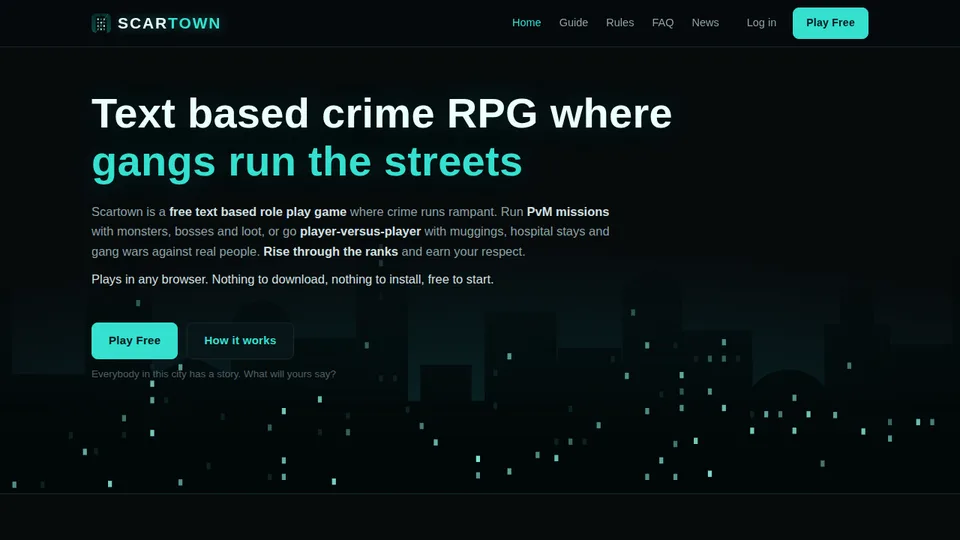
Scartown says what you do in its opening lines: missions against monsters and bosses, or muggings, hospital stays and gang wars against real people. Its FAQ admits that “the city is also young and small”. Asked how long it takes to reach the top, it answers: “There is no top, which is the honest answer.” Its news page puts a date against every change.
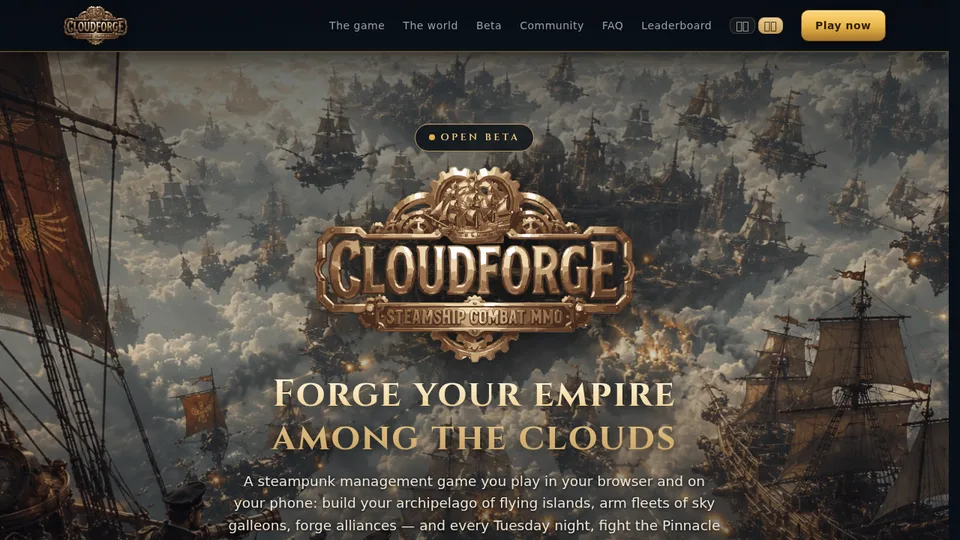
Cloudforge is built by one person. Its homepage footer states that “AI tools were used in the development of Cloudforge to code and create artworks”, and its FAQ repeats it. The same FAQ says the only things for sale are liveries, and that you start as a guest and save your progress later. The beta notice warns that progress may be reset, adding “we all know it from day one”.
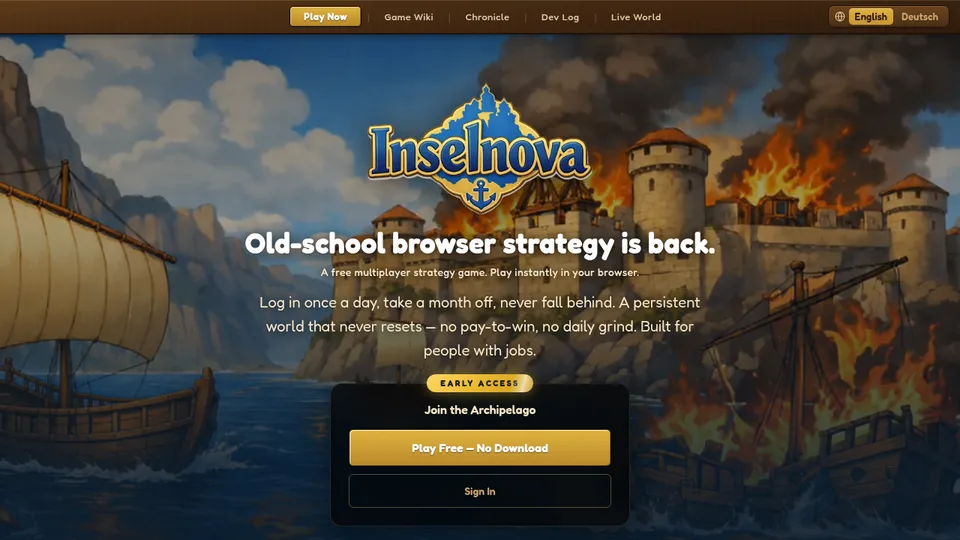
Inselnova names its developer, Darren, on its about page, and says plainly that it reimagines the old German game Inselkampf. His dev log has dated posts going back to February 2026, many of them about his AI-assisted workflow.
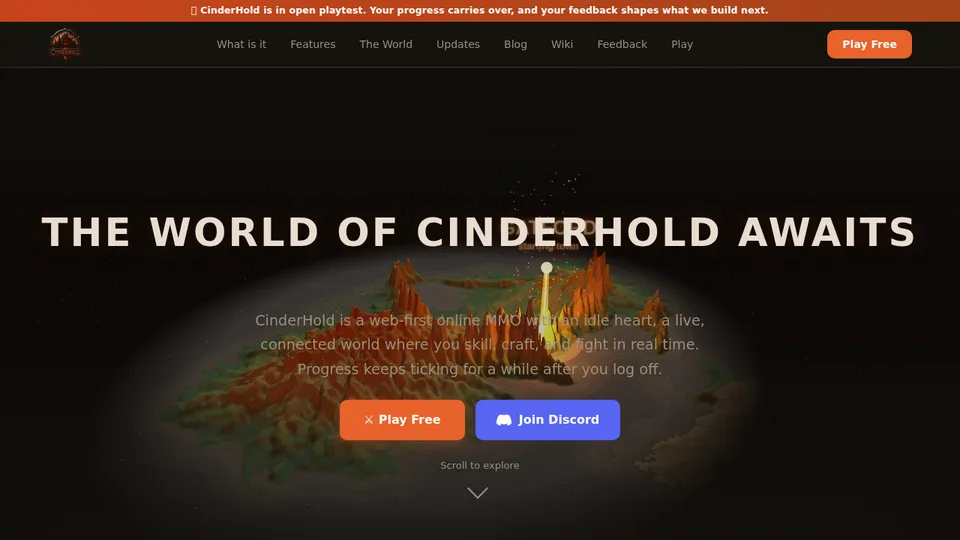
Cinderhold’s blog is “written by the person developing it, and the agents that maintain it”. Its patch notes are dated. The entry for 13 August 2026 admits that rare drops had been “quietly landing less often in live fights than the numbers promised”, and fixes them to match the rates the wiki shows. A developer who publishes a bug that worked against players is doing the opposite of slop.
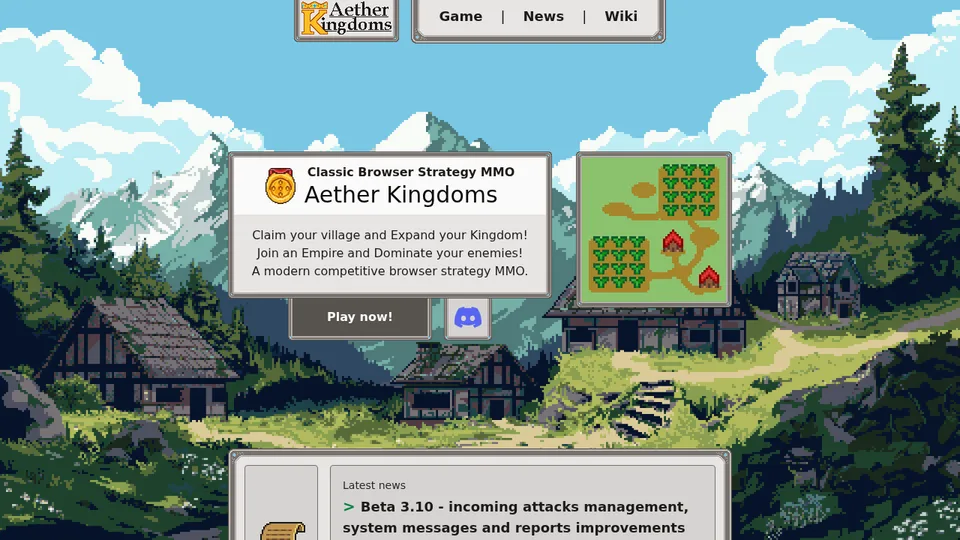
Aether Kingdoms has a team page that names its game designer, Friso van Dijk, and credits its programmer and pixel artist by handle. Numbered, dated patch notes have appeared every week or two since July. The homepage says Premium is “coming soon” and will offer “convenience and advanced statistics, no power”.
Idlemir takes the other side. Its homepage says it was “Created by humans without AI”. It has the same basics as the others: a public guide, a ladder, and a news log with dated entries every month since late 2025.
The tools are not the problem
Cloudforge, Inselnova and Cinderhold say they use AI tools. Idlemir says it does not. All four tell players what they are getting, and three of them keep a dated log of their work in public. That is the line we draw. Disclosed AI use is not one of our exclusions. Template legal pages, login walls with nothing behind them and sites with no dates anywhere have all cost games a listing.
If AI tools wrote your copy, read it as a player would. Generated text tends to describe a genre rather than a game. Replace every sentence that could sit on a rival’s homepage with one only your game could say: a number from your rules, a name from your map, a decision a player makes on day one.
A ten-minute check before you post your game
- Read your terms, privacy and refund pages in full. Search them for “REPLACE”, “TODO”, “yourdomain”, “lorem” and your framework’s default site title.
- Open your homepage logged out, on a phone. Check that the first screen says what a player does.
- Put a date on your newest update, somewhere anyone can read it.
- Remove or explain every number you could not defend to a sceptical player.
- Say who runs the game and how it makes money.
- Link one community space, and describe it at its real size.
When that is done, submit the game. A person reads every submission and replies within seven days. Our about page has the full criteria.